Neurodiversity in construction
It seems that a disproportionate number of neurodivergent people work in the construction industry. Why might that be? What barriers do they face? And how can they make work better?
Neurodiversity in construction: some statistics
According to a 2023 survey on neurodiversity in construction by the National Federation of Builders:
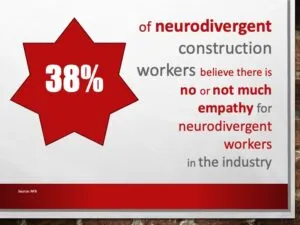
- One in four construction workers consider themselves to be neurodivergent.
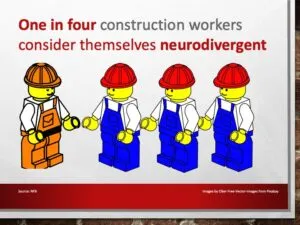
- 38% of neurodivergent construction workers believe there is no or not much empathy for neurodivergent workers in the industry.
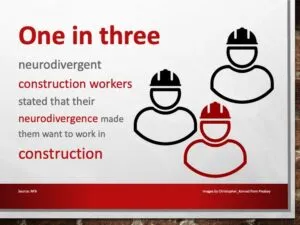
- One in three neurodivergent construction workers stated that their neurodivergence made them want to work in construction.
Neurodiversity in construction: Why might neurodivergent people work in construction?
Here are some reasons which might explain what appears to be a disproportionate number of neurodivergent people working in construction.
Working in construction may match neurodivergent skills.
“I chose to do a three-year bricklaying apprenticeship for a large national house builder as I knew I had to do a practical job that I would enjoy and be good at.
“My strengths of having a very good practical mind meant my understanding was very useful in most construction scenarios.
“My practical thinking and resolution skills were very strong in comparison to many others.
“I can resolve most practical problems instantly that other academic managers would not be able to do or think of.”
Luke, British Dyslexia Association website
Neurodivergent workers might find it difficult to get and/or keep other jobs.
“I spent a lot of my childhood helping my dad make things. I did try working in other jobs, as my family and I thought it best I tried, but I couldn’t get into them, and felt hindered by my disabilities.
“I have special needs ASD, RAD and severe dyslexia and dyspraxia which has been a huge challenge throughout my life. There are lots of kids who struggle academically but are brilliant with their hands.”
Kaidan Radford
The work is not public-facing.
“There are definite advantages for autistic people working in construction. It is not public-facing, so communication and social skills are not at a premium.“Also, you will tend to be working with relatively restricted numbers of other people.“
Martin, National Autistic Society forum
Neurodiversity in construction: overcoming barriers
Communication barriers
“I have worked all my adult life in construction, in spite of my poor hand-eye co-ordination and my difficulty with reading drawings.“I struggled a lot to understand 2D representations of complex 3D objects, but in the end I managed to do it well enough to get by.”
MortarMonster, DyspraxicAdults Forum
Social barriers
“There is a tradition of leg-pulling, especially of newcomers, that you would have to be OK with.”
Kaidan Radford
“I did find the general site banter confusing at first but now join in.”
Kaidan Radford
Neurodiversity in construction: making work better
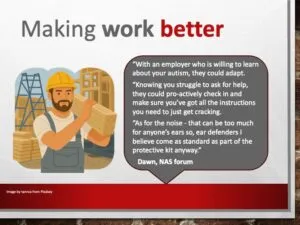
“With an employer who is willing to learn about your autism, they could adapt.
“Knowing you struggle to ask for help, they could pro-actively check in and make sure you’ve got all the instructions you need to just get cracking.
“As for the noise – that can be too much for anyone’s ears so, ear defenders I believe come as standard as part of the protective kit anyway.”
Dawn, National Autistic Society forum
Neurodiversity in construction: what the union can do
By joining and getting active in a trade union (usually Unite the Union), construction workers can make their position at work more secure.
The union can:
- campaign for workplace change
- organise for safer workplaces
- provide education and training.
Red in the Spectrum ran a webinar on neurodiversity in construction for Unite the Union Scotland in March 2026.
To arrange something similar, or other support for your trade union on the issue of neurodiversity, please check out Trade unions and neurodiversity: 16 ways in which Red in the Spectrum can help you.